Mill-to-recovery link
Records connect the oil to a named mill, production period, effluent pathway and identified recovery point.
POME-derived oil is recovered from palm oil mill effluent. Its identity depends on the recovery point and effluent handling, so the record begins at the mill.
Desk answer
POME means palm oil mill effluent, the liquid stream generated during palm-oil milling. The traded material addressed here is recovered oil separated from that effluent, not untreated wastewater.
Applications
Typical users, supply profiles and points to clarify before a discussion.
After suitable recovery, the oil may be considered for technical or energy processing. Its route depends on composition, environmental controls, legal classification and programme-specific origin requirements.
Records connect the oil to a named mill, production period, effluent pathway and identified recovery point.
The description clearly separates recovered oil from the remaining aqueous effluent, sludge and any oil obtained from other palm streams.
Recovery date, residence time, storage and exposure are recorded because biological and chemical change can continue quickly.

Mill context
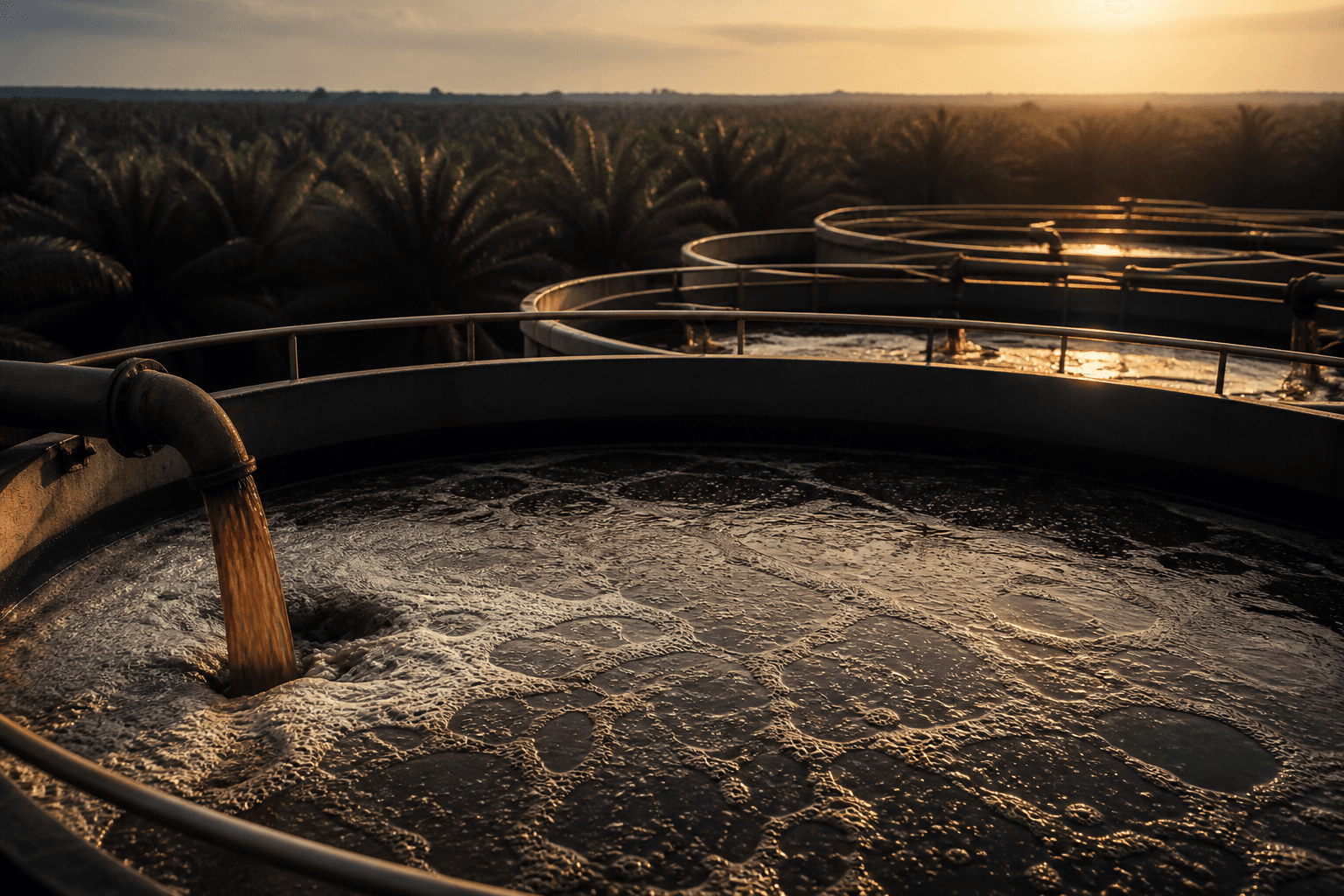
Clarification, sterilisation and cleaning produce liquid streams. Combined wastewater, commonly called POME, can carry residual oil, suspended solids and a high organic load.
A process map should show where streams join and oil is recovered, preventing confusion with tank-bottom oil or other palm residues.
Recovery
Oil may be separated at different points using skimming, settling, centrifugation or other equipment. Recovery before a treatment pond is not the same history as recovery after extended residence in a pond or sludge system.
The method does not alone establish quality. Dates, operating records and tank movements are needed to connect the offered load with a specific recovered fraction.
Condition
Water, microorganisms, heat and time can alter acidity, odour and separation. FFA means free fatty acids, which can increase as oil breaks down; it is one indicator, not a complete verdict.
Sampling may cover moisture and impurities, total fat or other relevant constituents. Results need a date because an old analysis may not describe dispatch condition.
Environment
Removing oil does not replace wastewater treatment. POME's organic load can consume oxygen in receiving water and generate methane under anaerobic conditions.
The supplier should explain how water and sludge are managed under local permits. A transaction must not obscure discharge or methane responsibilities.
Evidence
Energy programmes may distinguish residues by origin and recovery route. An invoice or broad declaration may be insufficient if volume is not linked to a process and period.
Review mass-flow records, storage changes and audit scope. Eligibility remains a decision under the receiving programme; physical tests cannot establish it alone.
Specifications
Indicative review points for POME-derived oil. The agreed specification belongs in the transaction documents.
Qualification reference only. Values and tolerances must be agreed for the specific lot or supply programme.
How we work
Identify the mill, relevant production lines, wastewater junctions and the exact point where oil leaves the liquid stream.
Record dates, equipment, operating context, separated phases and the destination tank for the recovered oil.
Homogenise as appropriate and report current parcel results with methods, temperature and observations of water or sediment.
Check outgoing oil volume against mill and tank records while retaining evidence of lawful management of remaining effluent.
FAQ
Practical questions about preparing a POME-derived oil file.
No. POME is an aqueous mill effluent. The commodity described here is an oil fraction recovered from it; the distinction should remain explicit in contracts and transport documents.
Residence time and contact with water, solids and microorganisms can differ greatly between an early mill separator and a later pond-recovery system.
A process diagram, production dates, recovery logs, tank movements, volume reconciliation, sampling reports and transport documents can form the chain.
No. The remaining water and sludge still require treatment and management under the applicable environmental controls.
No. Chemistry describes condition and composition. Residue status also depends on process origin, records, law and the rules of the receiving programme.
Related insights
No related insight is currently published for this product.
Reference sources
Commodity workspace
Supporting view for qualification and preparation.
Related commodities
Turco & Co
Company and contact details form part of the intake review.
Commercial files coordinated worldwide across major trade regions.
Specifications, certifications and shipping documents coordinated where applicable.
A reviewed file follows a clear contact route as the discussion progresses.