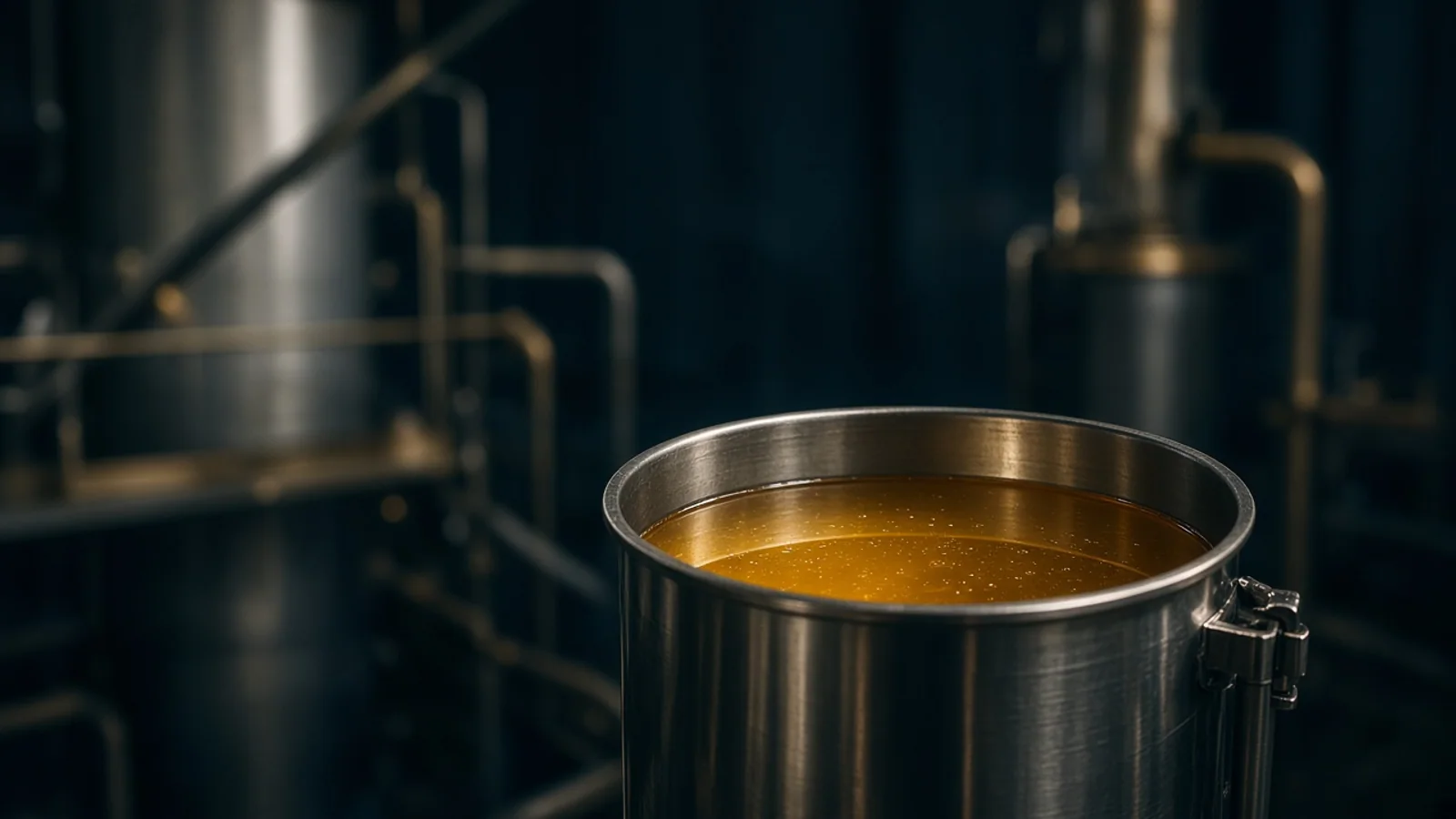
Named parent oil
The file identifies whether the stream arose from soybean, rapeseed, sunflower, palm or another declared refining line.
Acid oils are recovered during the refining of fats and oils, but their composition follows the original feedstock and recovery route. We help parties turn that production history into a usable lot description.
Desk answer
Acid oil is a fatty material recovered by acidulating soapstock or related refining residues. It commonly contains free fatty acids, neutral oil, water and non-fat matter in proportions that vary by source and process.
Applications
Typical users, supply profiles and points to clarify before a discussion.
Potential outlets include soapmaking, oleochemical conversion, technical formulations and energy processing. Feed use, where contemplated, is subject to specific legal definitions, origin restrictions, safety assessment and buyer controls.
The file identifies whether the stream arose from soybean, rapeseed, sunflower, palm or another declared refining line.
Neutralisation, soapstock handling and acidulation are described so the buyer can interpret the resulting mixture.
Sampling plans account for possible separation of fatty, aqueous and sediment fractions during storage.

Formation
In chemical refining, alkali can react with free fatty acids to form soapstock. Acidulation converts those soaps back toward free fatty acids and allows phases to be separated.
That simple outline does not make all acid oils alike. Parent oil, refining losses, reagent control and separation efficiency shape each production run.
Composition
An acid oil may contain free fatty acids, triglycerides or neutral oil, moisture, mineral matter and minor compounds inherited from the source. Triglycerides are the main fat molecules found in edible oils.
A useful analysis reports defined methods and units. Buyers should not infer composition from product name, colour or country of origin.
Sampling
Water and sediment can settle while lighter fat remains above, especially after quiet storage. A grab sample from one level may therefore misstate the parcel.
Tank circulation, temperature, sampling depth and composite preparation should be agreed. Sealed retention samples help address later differences without replacing delivery inspection.
Operations
High free-fatty-acid content may suit one conversion route and burden another. Moisture, solids, phosphorus-bearing material or residual mineral acidity can also affect corrosion, separation and yield.
These effects are process-specific. The receiver should set its own acceptance criteria and test methods rather than rely on a universal acid-oil grade.
Governance
Descriptions in feed-material catalogues and national rules may impose conditions on products from vegetable-oil refining. Safety, traceability and prohibited inputs still require operator review.
A technical-market transaction does not establish feed suitability. Conversely, documents prepared for one legal region may not satisfy another, so destination must be fixed before claims are made.
Specifications
Indicative review points for Acid Oils. The agreed specification belongs in the transaction documents.
Qualification reference only. Values and tolerances must be agreed for the specific lot or supply programme.
How we work
Record source oil, refinery line, refining stage and whether the run contains material from more than one origin.
Connect soapstock receipt, reagent addition, settling or separation and storage tank to the produced lot.
Agree temperature and circulation, then collect a representative composite with retained samples.
Compare analysis, origin documents and legal status with the named receiver's process and jurisdiction.
FAQ
Practical questions about preparing a Acid Oils file.
No. Acid oils arise from refining residues and acidulation; UCO is recovered after cooking. Their evidence chains and compositions are different.
The parent oil influences fatty-acid profile, minor compounds, customer restrictions and the interpretation of analysis.
It indicates the amount of alkali needed to neutralise acidic components under a stated method. It does not describe every impurity or establish an end use.
Not reliably when water or sediment has separated. Sampling should reflect tank geometry, temperature and mixing condition.
No. Legal definitions, source materials, processing, safety evidence and the operator's approvals must all be checked for the destination.
Related insights
No related insight is currently published for this product.
Reference sources
Commodity workspace
Supporting view for qualification and preparation.
Related commodities
Turco & Co
Company and contact details form part of the intake review.
Commercial files coordinated worldwide across major trade regions.
Specifications, certifications and shipping documents coordinated where applicable.
A reviewed file follows a clear contact route as the discussion progresses.