Commercial definition
Identity lens: Copper cable scrap is defined first by cable construction: conductor, insulation, shielding, armouring, plugs or terminations.
A sourcing brief for insulated and prepared copper cable scrap. Copper cable scrap is defined first by cable construction: conductor, insulation, shielding, armouring, plugs or terminations. Household wire, data cable, harnesses, power cable and stripped conductor are operationally different streams even when copper is visible.
Desk answer
Unlike generic copper scrap, cable value and routing are strongly influenced by insulation, armour, conductor gauge and the practicality of separation.
Applications
Typical users, supply profiles and points to clarify before a discussion.
Downstream route: Depending on construction, cable can be stripped, granulated, mechanically separated or routed to an authorised metallurgical process.
Identity lens: Copper cable scrap is defined first by cable construction: conductor, insulation, shielding, armouring, plugs or terminations.
Grade lens: Trade terms such as Barley or Druid may be referenced where relevant, while regional shorthand for recovery classes is common.
Inspection lens: Inspection should consider conductor metal, insulation families, steel armour, aluminium, connectors, moisture, dirt, burnt material and sealed or hazardous components.
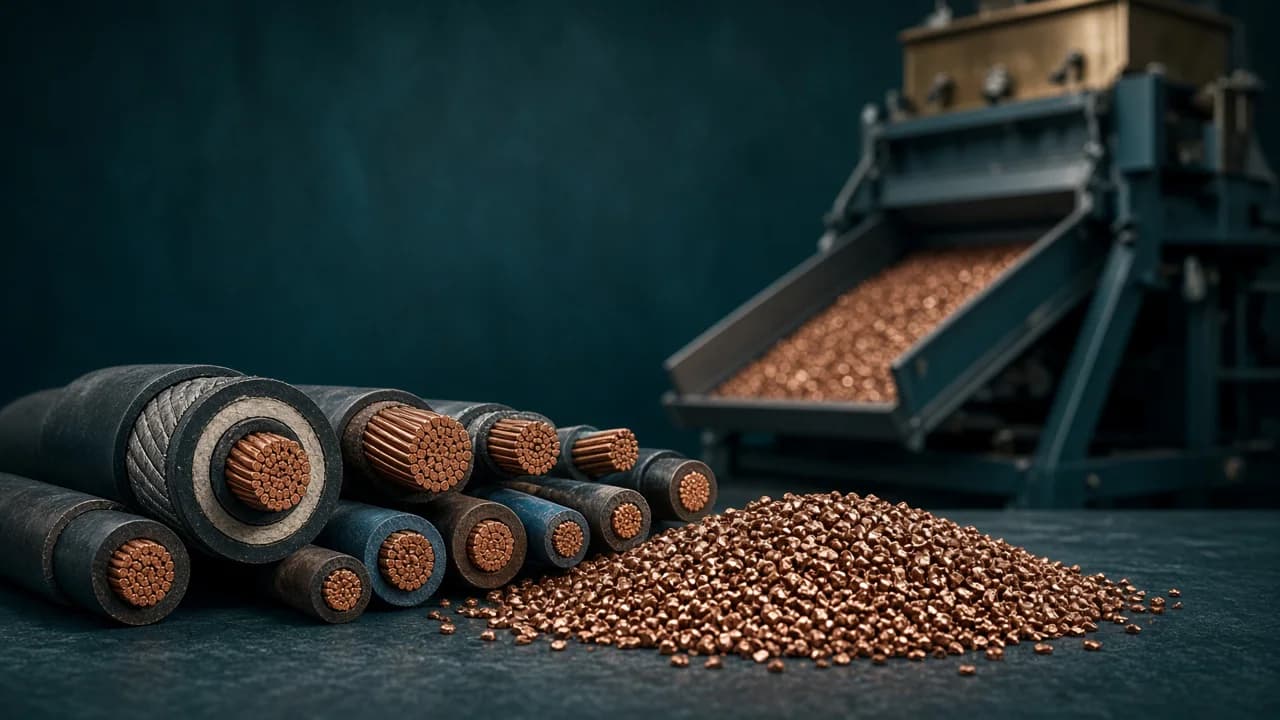
Cable anatomy and source
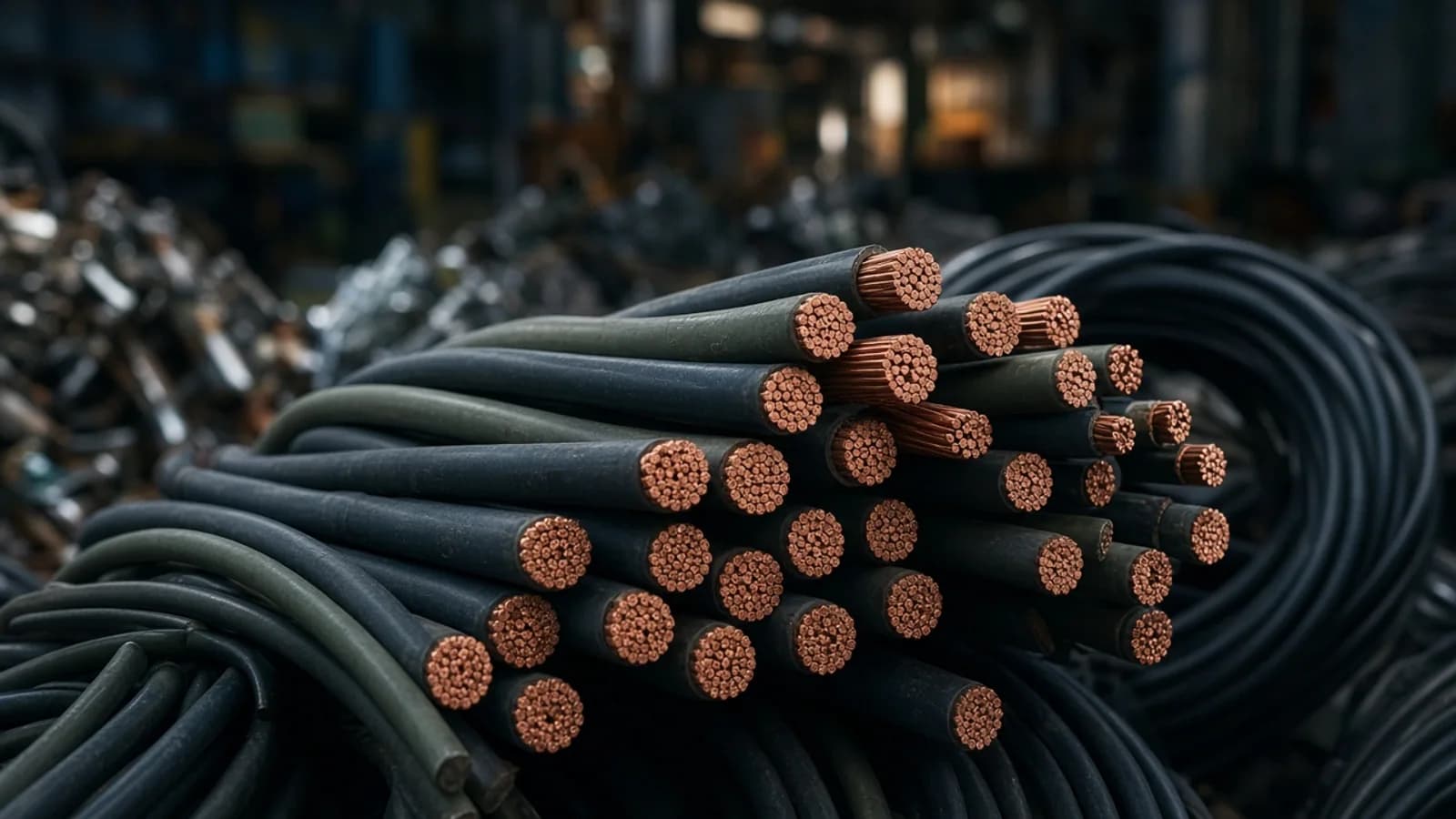
Copper cable scrap begins with a manufactured assembly, not a single metal: solid or stranded conductors may sit beneath insulation, screens, fillers, bedding and an outer sheath, each affecting how the lot should be described.
Origin provides essential context because building wire, utility cable, telecom lines, vehicle harnesses and factory offcuts arrive with different gauges, service histories and dismantling residues that should remain separately identified.
Measured recovery potential
Inspection should establish whether the conductive core is copper throughout, copper-coated material or a mixed-metal assembly, while recording strand size, cable diameter and the type and condition of every insulating layer.
Recovery potential must be measured from representative cuts, controlled stripping or agreed trial processing, with scales and sampling procedures documented; colour, flexibility or a trade nickname cannot support a guaranteed result.
Attachments and safe handling
Steel wire armour, aluminium screens, brass terminals, plugs, junction boxes and polymer fillers add distinct fractions to a cable lot and should be quantified or segregated where practical before commercial evaluation.
Oil, water, soil, tar, burnt insulation, sharp armour and unidentified sealed components require specific controls; suspect legacy coatings or fire-damaged cable should be isolated and assessed before cutting or granulation.
Preparation and lot control
Straight, larger cable may suit mechanical stripping when sheath and conductor can be separated consistently, whereas flexible, fine or mixed-gauge material may require granulation followed by calibrated air, screen or density separation.
Sampling must reach the interior of reels, cages and compressed bundles, then preserve increments from different depths and cable families; trial output should be labelled so copper, polymer and fines can be reconciled without assumptions.
Reels, freight and records
Reels should be chocked and restrained, coil ends tied back and loose harnesses contained to prevent springing, snagging or axle overload; packaging choice should also allow safe unloading and verification at destination.
The shipment file should state origin, cable families, preparation, gross and net weights, reel tare and ownership, photographs, packing list and applicable waste-transport documents, with any cutting restrictions agreed in advance.
Specifications
Indicative review points for Copper Cable Scrap. The agreed specification belongs in the transaction documents.
Qualification reference only. Values and tolerances must be agreed for the specific lot or supply programme.
How we work
First establish: Copper cable scrap is defined first by cable construction: conductor, insulation, shielding, armouring, plugs or terminations.
Then verify: Inspection should consider conductor metal, insulation families, steel armour, aluminium, connectors, moisture, dirt, burnt material and sealed or hazardous components.
Route against: Depending on construction, cable can be stripped, granulated, mechanically separated or routed to an authorised metallurgical process.
Before dispatch: Reels, coils, loose harnesses and granulate each require different packaging and controls.
FAQ
Practical questions about preparing a Copper Cable Scrap file.
Contract answer: Trade terms such as Barley or Druid may be referenced where relevant, while regional shorthand for recovery classes is common.
Inspection answer: Inspection should consider conductor metal, insulation families, steel armour, aluminium, connectors, moisture, dirt, burnt material and sealed or hazardous components.
Important limit: No.
Document answer: Reels, coils, loose harnesses and granulate each require different packaging and controls.
Related insights
No related insight is currently published for this product.
Reference sources
Commodity workspace
Supporting view for qualification and preparation.
Related commodities
Turco & Co
Company and contact details form part of the intake review.
Commercial files coordinated worldwide across major trade regions.
Specifications, certifications and shipping documents coordinated where applicable.
A reviewed file follows a clear contact route as the discussion progresses.