Wheel-only segregation
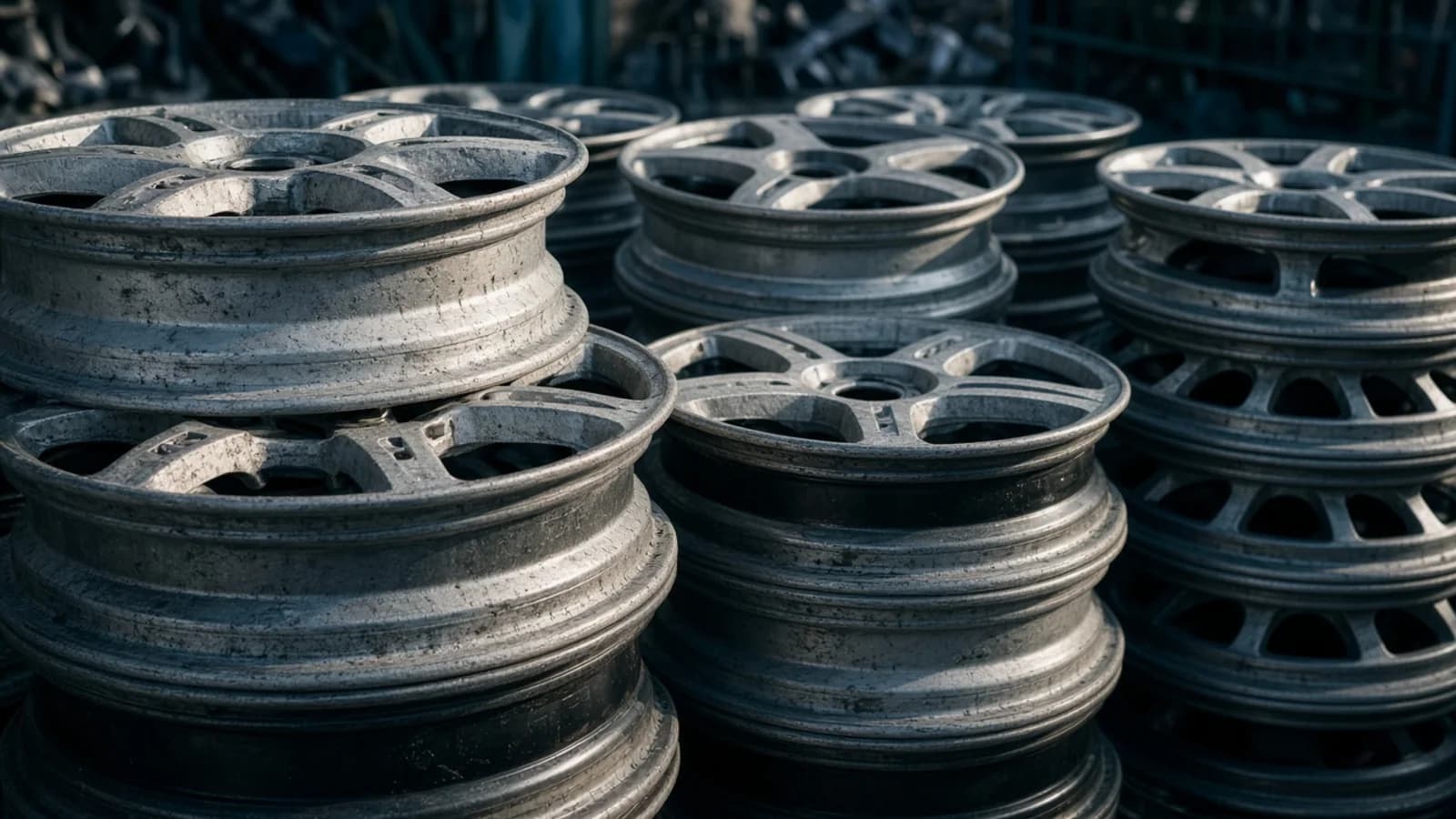
Lot evidence distinguishes cast aluminium road wheels from steel rims, magnesium wheels, hubs, brake parts and miscellaneous castings.
We connect dismantlers, tyre networks, refurbishers and processors with cast-aluminium buyers. Enquiries identify whole or broken wheels and remaining tyres, steel inserts, weights, valves or plated finishes.
Desk answer
Aluminium wheel scrap is a distinct cast-alloy feedstock recovered from passenger and commercial vehicle road wheels. It is not interchangeable with extrusions, sheet or beverage cans. Consistent sourcing depends on confirming that the lot contains aluminium wheels, removing non-aluminium components and documenting any mixed constructions or coatings.
Applications
Typical users, supply profiles and points to clarify before a discussion.
Prepared wheel scrap is commonly remelted for secondary foundry alloys and, where chemistry and process controls permit, closed or semi-closed automotive recycling routes. The receiving plant determines whether it can accept complete rims, fractured pieces, coated wheels or material that has undergone mechanical pre-processing.
Lot evidence distinguishes cast aluminium road wheels from steel rims, magnesium wheels, hubs, brake parts and miscellaneous castings.
Inspection records tyres, valves, lead or zinc weights, steel inserts, fasteners and attached vehicle components.
Painted, lacquered, polished and plated surfaces are identified because each can affect preparation and melt-shop controls.
Material identity
Shape is helpful but not conclusive. A wheel lot can contain steel rims, magnesium products, wheel hubs or attached suspension and brake components. Source controls and visual inspection should establish that the declared stream is cast aluminium road wheels.
ReMA/ISRI specifications provide recognised vocabulary for wheel scrap and preparation. Their names do not create a universal contract: counterparties should state which edition or definition applies and record negotiated exceptions, inspection rights and claim procedures.
Preparation
A tyre is not merely surface contamination; it changes handling, transport, fire exposure and processing. Valve assemblies, balance weights, centre caps, steel sleeves and bolts also need a declared removal practice. Photos should show both wheel faces and representative valve and hub areas.
Breaking wheels can aid inspection and charging, but fragments must remain identifiable and free from unrelated cast scrap. Processing choices should follow the receiver’s equipment and local safety requirements.
Surface condition
Original paint and clearcoat, refurbishment layers, decorative plating and road residues produce different preparation needs. A bright surface is not proof that a wheel is uncoated, and chrome-look finishes may involve several layers.
Reports should identify observed finish categories and unusual residues. They should not promise a fixed metal yield, chemistry or dross outcome, because those results depend on the actual lot and the buyer’s process.
Traceability
Vehicle source, collection period, depollution operator, storage location and processing method help buyers assess consistency. Where end-of-life vehicle rules apply, authorised treatment and transfer records may be important.
Weighbridge tickets, container photographs and seal references connect inspected material to the shipment. Any blending after inspection should be disclosed and, where required, rechecked.
Transaction design
The parties define whole or broken format, excluded materials, attachment condition, packaging, sampling and final quality determination. Turco & Co coordinates information and specialist inspection where requested; the receiving party retains its contractual acceptance role.
Cross-border status varies with preparation, origin and destination. Environmental and waste-shipment classification should be confirmed by competent advisers rather than inferred from the commercial grade name.
Specifications
Indicative review points for Aluminium Wheel Scrap. The agreed specification belongs in the transaction documents.
Qualification reference only. Values and tolerances must be agreed for the specific lot or supply programme.
How we work
Record collection channel, vehicle origin, wheel construction, depollution and storage practices.
Verify tyre removal, de-metalling, finish categories, breakage and exclusion of other castings.
Align piece form, packing, analytical evidence and inspection access with written intake rules.
Link weights, photographs, seals and contractual quality determination to the dispatched lot.
FAQ
Practical questions about preparing a Aluminium Wheel Scrap file.
No, unless a buyer expressly contracts for a mixed stream. Steel rims should be segregated and the checking method documented.
Most wheel-scrap transactions require de-tyred material, but the binding requirement is the receiver’s written specification and applicable transport and safety rules.
No. Automotive wheels use casting alloys and manufacturing routes that can vary. Lot consistency and any agreed analytical verification matter.
It references an industry description. Only the incorporated contract language determines the agreed preparation, exclusions and remedies.
Related insights
No related insight is currently published for this product.
Reference sources
Commodity workspace
Supporting view for qualification and preparation.
Related commodities
Turco & Co
Company and contact details form part of the intake review.
Commercial files coordinated worldwide across major trade regions.
Specifications, certifications and shipping documents coordinated where applicable.
A reviewed file follows a clear contact route as the discussion progresses.