Collection defines risk
Interceptor, wastewater and mixed FOG streams carry different contamination and traceability profiles.
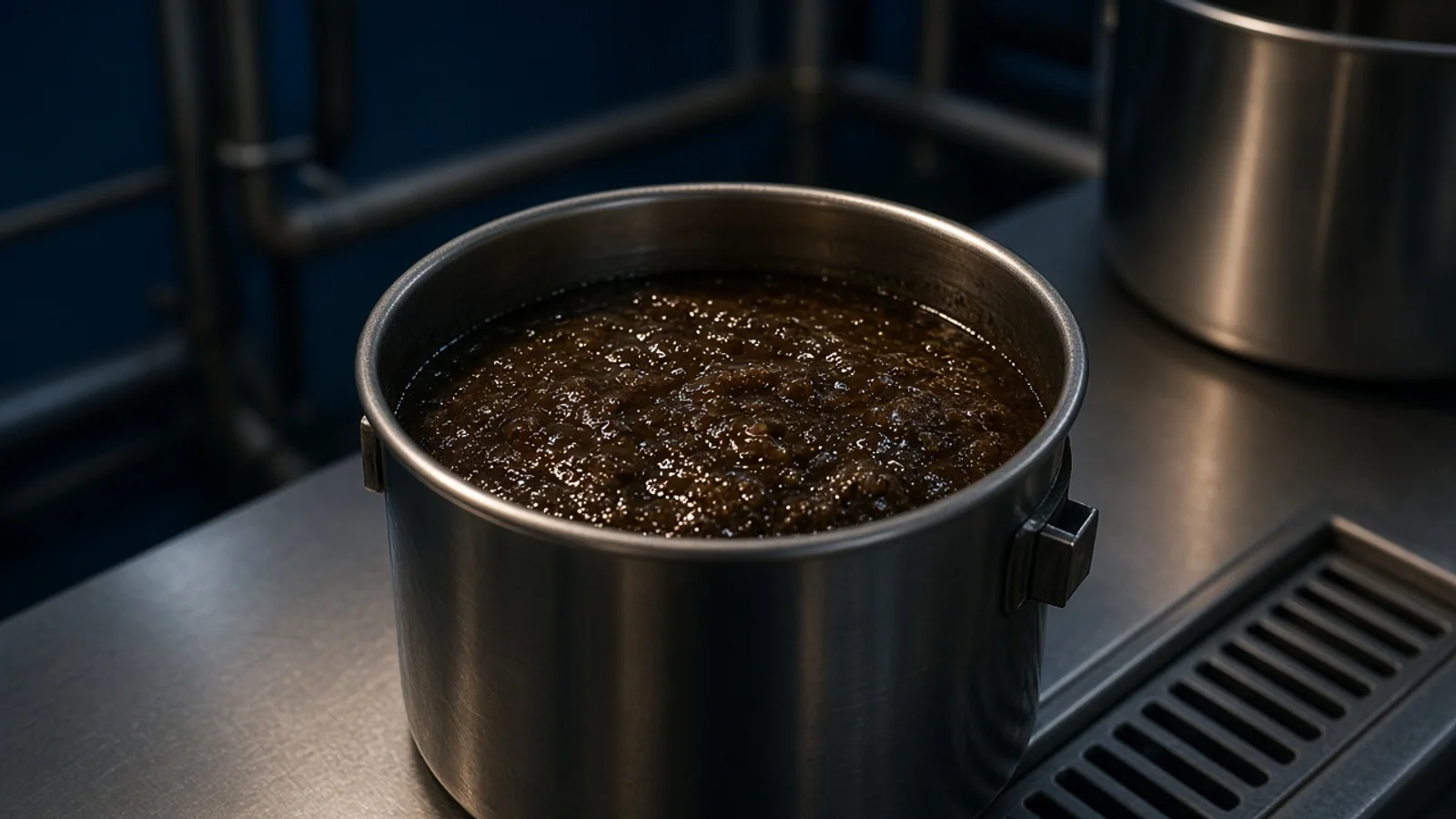
Brown grease is a variable recovered lipid stream commonly associated with fats, oils and grease (FOG) collected from grease interceptors or wastewater systems. Terminology differs by market. We identify the source, collection boundary and treatment before discussing an outlet, and never assume fuel or incentive eligibility.
Desk answer
FOG is a broad operational term for fats, oils and grease; brown grease often refers to the lower-quality, water- and solids-bearing material recovered from interceptors, traps or wastewater treatment. It differs from source-separated used cooking oil. Composition can reflect food operations, cleaning chemicals, grit, wastewater and collection practice. A credible offer discloses generator categories, collection network, treatment steps, storage, representative analysis and chain of custody. Waste status, sustainability treatment and acceptance under a renewable-fuel program remain jurisdiction- and pathway-specific.
Applications
Typical users, supply profiles and points to clarify before a discussion.
After suitable separation and treatment, recovered lipid content may be evaluated for anaerobic digestion, industrial fuel conversion, biodiesel or renewable-diesel preprocessing, or other authorized recovery routes. High water, solids, ash, salts, sulfur, metals, polymers or unknown contaminants can make a route unsuitable. No yield, certification or eligibility is guaranteed.
Interceptor, wastewater and mixed FOG streams carry different contamination and traceability profiles.
Settling, heating, screening, centrifugation and blending alter the marketed material.
Waste, sustainability and fuel-program status require evidence and current-rule review.
Stream identity
FOG describes a family of materials rather than one specification. Brown grease generally originates in grease traps, interceptors or wastewater handling and often contains appreciable water and solids.
Source-separated fryer oil has a different collection history. Mixing the categories obscures contaminants, regulatory identity and chain-of-custody evidence.
Collection map
Restaurant interceptors, industrial food sites and municipal systems present different inputs. Route sheets, service records, container IDs, weights and transfer logs help establish provenance.
A pooled tank needs a defined acceptance policy. Loads exposed to mineral oil, solvents, detergents or sanitary wastewater may require exclusion or separate handling.
Physical preparation
Processors may screen, settle, warm, decant, centrifuge or otherwise separate water and solids. These steps improve handling but do not create a universal grade.
Relevant testing can include water, sediment, ash, acidity, sulfur, phosphorus, metals, chlorine, polymeric material and other buyer-selected contaminants. Sampling a stratified tank demands a suitable protocol.
Legal pathway
Collection and transport can be governed by waste, wastewater, animal-by-product, environmental or transport rules. Requirements vary by origin and destination.
Renewable-fuel programs use their own feedstock definitions and evidence tests. Brown grease or FOG is not automatically eligible, and a prior decision in one market does not transfer to another.
Controlled transaction
The agreement should define eligible sources, prohibited inputs, treatment state, analytical basis, sampling, tank condition, documents, rejection and claims. Water and solids disposal responsibility should be explicit.
Pilot acceptance, pre-shipment sample or additional testing may be appropriate. Final technical, environmental and regulatory approval belongs to the parties and competent advisers.
Specifications
Indicative review points for Brown Grease. The agreed specification belongs in the transaction documents.
Qualification reference only. Values and tolerances must be agreed for the specific lot or supply programme.
How we work
Identify generator classes, route controls, permits, transfers and excluded materials.
Record separation operations, tank consolidation and management of water and solids.
Apply a stratification-aware sampling plan and the buyer’s contaminant panel.
Confirm transport, waste status, end-use authorization and program evidence before shipment.
FAQ
Practical questions about preparing a Brown Grease file.
It is a trade term commonly used for grease-rich material recovered from food-service interceptors, grease traps or wastewater systems, often with substantial water and solids.
No. Used cooking oil is generally source-separated fryer oil. Brown grease has a different collection environment and typically a more complex contaminant profile.
No. FOG means fats, oils and grease and can describe several streams. The physical source and collection boundary must be stated.
No. Eligibility depends on program definitions, verified origin, processing, chain of custody and the receiving pathway.
The buyer sets the panel based on its process. Water, sediment, ash, acidity, sulfur, phosphorus, metals, chlorine and unexpected hydrocarbons may be considered.
Related insights
No related insight is currently published for this product.
Reference sources
Commodity workspace
Supporting view for qualification and preparation.
Related commodities
Turco & Co
Company and contact details form part of the intake review.
Commercial files coordinated worldwide across major trade regions.
Specifications, certifications and shipping documents coordinated where applicable.
A reviewed file follows a clear contact route as the discussion progresses.