A changing coproduct matrix
Feedstock, catalyst, alcohol recovery and post-treatment shape each plant’s crude glycerine.
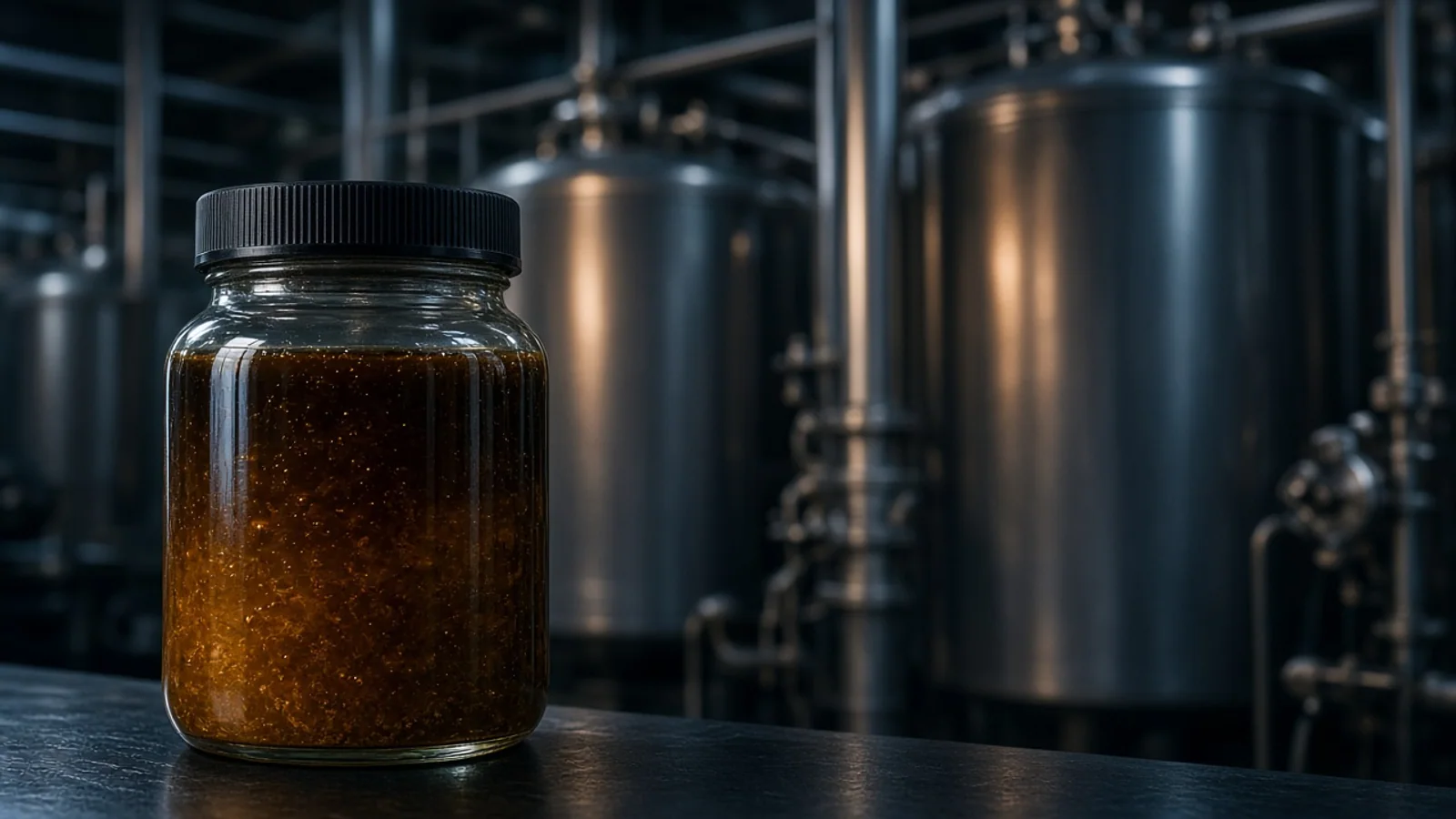
Crude glycerine is a variable coproduct, most commonly separated during biodiesel manufacture. It contains glycerol alongside water, salts, soaps or fatty matter and possible residual methanol. We structure offers around the real matrix and its production route, because the word “crude” is not a complete specification.
Desk answer
In base-catalysed transesterification, oils or fats react with an alcohol to make biodiesel and a glycerol-rich phase. Subsequent alcohol recovery and treatment differ among plants, so crude glycerine can vary substantially in glycerol, moisture, ash, salts, matter organic non-glycerol and residual processing chemicals. Potential buyers need a representative analysis, feedstock and catalyst context, treatment history and intended use. It is not pharmaceutical or food-grade glycerin, and no end-use approval follows automatically from the coproduct name.
Applications
Typical users, supply profiles and points to clarify before a discussion.
Depending on composition, regulation and purification capability, crude glycerine may feed glycerol refining, anaerobic digestion, industrial formulations, chemical conversion or authorized feed applications. Salts, methanol, contaminants and variability can exclude a route. The receiving operator must complete technical, safety and regulatory approval.
Feedstock, catalyst, alcohol recovery and post-treatment shape each plant’s crude glycerine.
Water, ash, salts, MONG, methanol and fatty matter help predict refining and handling.
Industrial, feed or energy acceptance is assessed independently; none is guaranteed.
Process origin
Biodiesel transesterification creates ester and glycerol-rich phases. Catalysts, feed oils and separation conditions carry different salts, soaps and organic matter into the coproduct.
Plants may recover alcohol, neutralise catalyst, acidulate soaps or concentrate the material to different degrees. These operations must be stated rather than hidden behind a generic grade name.
Matrix control
Glycerol, water, ash, chloride or other salts, MONG, methanol, pH, density and fatty matter may be relevant. Metals and feedstock-specific contaminants can matter for selected outlets.
Results depend on methods and sampling. A well-mixed tank composite, sealed retain and agreed independent laboratory reduce avoidable disputes.
Safe handling
Residual methanol affects flash behaviour, worker exposure, transport classification and downstream use. Safety data, ventilation, ignition control and competent classification are essential.
Crude glycerine can stratify or carry sediment. Tank design, recirculation, compatible materials and unloading plan should reflect the actual cargo.
Market fit
A refiner may value glycerol recovery while accounting for salt disposal and organics. A digester evaluates biodegradability and inhibition. Other users apply different controls.
Food, cosmetic, pharmaceutical and feed chains have specific legal and quality requirements. Crude glycerine must not be represented as refined glycerin, and approval is not transferable between buyers.
Transaction design
The contract should identify origin plant, feedstock category, treatment state, quality basis, test methods, sampling point, documents and claim procedure. Transport classification and tank responsibilities also need ownership.
A new sample or review may be needed after feedstock, catalyst or plant-condition changes. Human technical and compliance validation closes the transaction.
Specifications
Indicative review points for Crude Glycerine. The agreed specification belongs in the transaction documents.
Qualification reference only. Values and tolerances must be agreed for the specific lot or supply programme.
How we work
Record biodiesel feedstock, catalyst, separation, methanol recovery and subsequent treatment.
Analyse a representative tank sample using the receiving process’s chosen methods.
Review safety, contaminants, legal permissions and purification or digestion capability.
Agree classification, tank preparation, sampling, documents, acceptance and claims.
FAQ
Practical questions about preparing a Crude Glycerine file.
It is a glycerol-rich coproduct, usually from biodiesel transesterification, that still contains varying water, salts, soaps, fatty matter and processing residues.
No. Refined grades undergo purification to defined requirements. Crude material should never be assumed suitable for food, cosmetic or pharmaceutical use.
Feedstock, catalyst, methanol recovery, neutralisation, acidulation, concentration and tank mixing all change the matrix.
Yes. It can affect safety, transport, processing and end-use acceptance. The relevant test and classification require competent review.
Potentially, depending on local authorization, composition and the user’s process. Neither use is guaranteed, and each buyer must approve the lot.
Related insights
No related insight is currently published for this product.
Reference sources
Commodity workspace
Supporting view for qualification and preparation.
Related commodities
Turco & Co
Company and contact details form part of the intake review.
Commercial files coordinated worldwide across major trade regions.
Specifications, certifications and shipping documents coordinated where applicable.
A reviewed file follows a clear contact route as the discussion progresses.