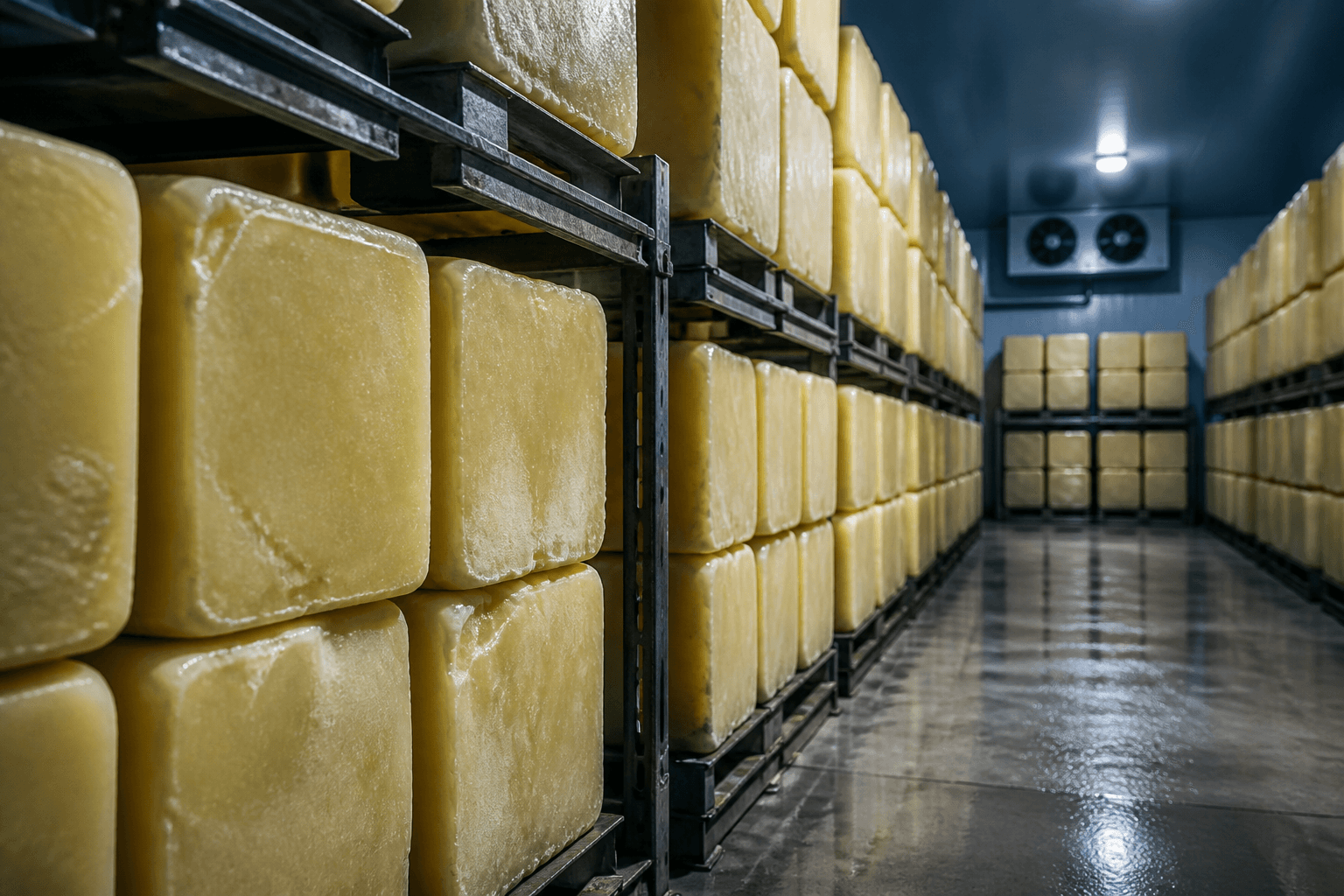
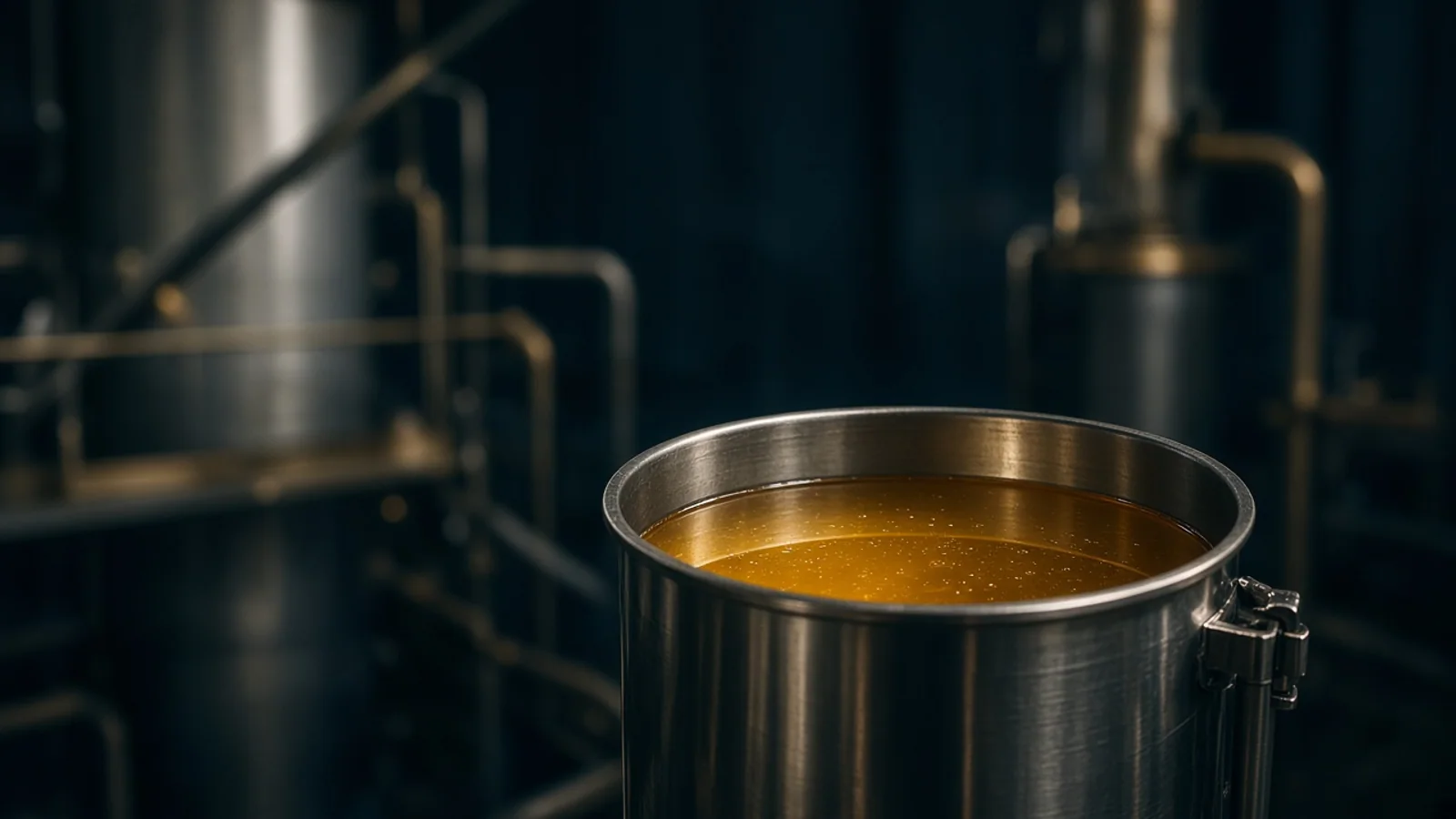
Two identities, not one shortcut
DCO is distillers corn oil from ethanol stillage; TCO requires an explicit origin and process description.
Distillers corn oil (DCO) is recovered at dry-mill ethanol plants from corn stillage. Technical corn oil (TCO) is a broader commercial term whose production route and composition must be stated by the seller. We help counterparties compare actual material rather than assuming the two names are interchangeable.
Desk answer
DCO and TCO are corn-derived lipid feedstocks used in renewable-fuel, oleochemical and selected feed channels, subject to the buyer’s process and applicable rules. DCO has a recognisable ethanol-coproduct origin; TCO may describe off-specification, recovered or technically processed corn oil. A useful offer therefore identifies the plant type, recovery method, previous handling, current analysis and intended market. Classification, sustainability treatment and regulatory acceptance remain transaction-specific.
Applications
Typical users, supply profiles and points to clarify before a discussion.
Potential outlets include renewable diesel or biodiesel pretreatment systems, fatty-acid and oleochemical processing, and feed manufacture where local authorization and the buyer’s formulation permit. Suitability depends on composition, contaminants, traceability and processing capability; the commodity name alone does not establish an approved use.
DCO is distillers corn oil from ethanol stillage; TCO requires an explicit origin and process description.
Free fatty acids, moisture, insolubles, phosphorus and unsaponifiables influence storage, pretreatment and conversion.
Origin records and mass-balance or sustainability documents are reviewed without promising certification or eligibility.
Product definition
At a dry-grind ethanol plant, centrifugation or related recovery separates corn oil from thin stillage before or during coproduct concentration. That stream is commonly called distillers corn oil. Its history differs from food-grade corn oil refining.
TCO has no single universal production definition. The seller should state whether it is recovered corn oil, a technically processed stream, a blended grade or another corn-origin material. Naming cannot replace disclosure.
Lot assessment
Typical discussions cover free fatty acids, moisture and volatile matter, insoluble impurities, phosphorus, sulfur, metals and unsaponifiable matter. Colour or appearance may help operational screening but does not prove composition.
Limits belong in the bilateral contract and should match the receiving plant. Sampling method, laboratory, test method and dispute procedure are as important as the figures.
Physical movement
Tank history, water exclusion, sediment management and temperature planning affect deliverability. Heating may be necessary in some conditions, but the loading party and carrier must choose equipment suited to the actual product and climate.
A retained loading sample and sealed composite can support reconciliation. Previous cargoes and cleaning evidence deserve review when cross-contamination could alter downstream acceptance.
Document trail
Useful records may include producer declarations, batch or tank references, weighbridge documents, bills of lading and analytical certificates. Sustainability programs can require additional chain-of-custody evidence.
No DCO or TCO cargo is automatically a waste, residue, advanced feedstock or certified material. Those conclusions depend on jurisdiction, scheme rules, process facts and verified documentation.
Commercial control
A workable contract identifies the product, origin, Incoterm, quantity tolerance, quality basis, sampling point, claim timing and document set. It also allocates responsibility for heating, demurrage and rejected loads.
Turco & Co structures information and introductions; counterparties retain responsibility for technical approval, regulatory review and final contract validation.
Specifications
Indicative review points for DCO/TCO. The agreed specification belongs in the transaction documents.
Qualification reference only. Values and tolerances must be agreed for the specific lot or supply programme.
How we work
Record whether the offer is DCO or TCO and document plant, process, blending and storage history.
Review recent analysis, representative samples and traceability records against the buyer’s intended route.
Agree tank, heating, loading, sampling, transport and document responsibilities.
Set contractual test methods, acceptance terms, claims procedure and human approvals before shipment.
FAQ
Practical questions about preparing a DCO/TCO file.
Yes. In this market DCO means distillers corn oil recovered as a coproduct of corn ethanol production, normally from stillage. It should not be confused with refined edible corn oil.
Not necessarily. Technical corn oil is a broader trade description. Its source and processing route must be declared, and a buyer should not infer DCO origin from the acronym alone.
No. Eligibility and carbon treatment depend on jurisdiction, pathway, origin, chain of custody and current program rules. Independent verification is required.
A buyer-led panel commonly considers acidity, moisture, insolubles, phosphorus, sulfur, metals and unsaponifiables. The relevant parameters and methods must be agreed for the actual process.
Related insights
No related insight is currently published for this product.
Reference sources
Commodity workspace
Supporting view for qualification and preparation.
Related commodities
Turco & Co
Company and contact details form part of the intake review.
Commercial files coordinated worldwide across major trade regions.
Specifications, certifications and shipping documents coordinated where applicable.
A reviewed file follows a clear contact route as the discussion progresses.