
Origins and destination markets
Exporting used cooking oil from Kenya: NEMA permits and Mombasa logistics
How UCO exports from Kenya work: NEMA licences, the per-consignment export permit, prior informed consent, insurance and shipping from Mombasa.

Direct answer
Kenya regulates used cooking oil as a waste. Transporting it requires a NEMA licence, and the waste regulations require a NEMA export permit for each consignment of hazardous waste, backed by a contract with the importer, prior informed consent from the destination country where applicable and proof of insurance. Confirm the classification of your UCO with NEMA and plan permit time before booking shipments from Mombasa.
UCO is regulated waste: licences before movement
Kenya treats used and waste cooking oil as regulated waste under national environmental law. NEMA’s 2025 waste management booklet lists used and waste cooking oil among the wastes it supervises. That single classification drives the rest of the export path: you need authority to move the material, authority to store or process it, and a separate export permission when the cargo leaves the country.
No one may transport waste without a NEMA licence, or operate a storage or processing facility without one. Collectors and aggregators who plan export programmes should confirm their licence scope covers transport and storage at the sites named on the contract, not only collection from kitchens.
If you are new to the market, start with NEMA on classification. Exporters sometimes assume UCO is a normal commodity oil until a haulier or port agent asks for waste paperwork. Confirming hazardous versus non-hazardous treatment early avoids booking freight on the wrong timeline.
One export permit per consignment
The Environmental Management and Co-ordination (Waste Management) Regulations, 2024, prohibit exporting hazardous waste without a NEMA permit and the prior informed consent document of the receiving country where that regime applies. The export permit is tied to one export transaction: it is not transferable and cannot be reused for a later shipment.
NEMA’s booklet sets out the dossier exporters typically assemble: a written purchase contract with the importer, notification and movement forms, proof that the receiving facility is licensed, prior informed consent from the destination country as appropriate, and an insurance policy. Fees listed in the booklet are KSh 5,000 for the application and KSh 50,000 per consignment; confirm current amounts with NEMA before you budget a programme.
Build lead time into the sales calendar. Buyers in Europe often fix monthly feedstock plans assuming a two-week document cycle; Kenyan waste export permits can take longer when PIC or insurance queries bounce. A contract that says “permit to follow” without a date is a demurrage risk at Mombasa.
- Written purchase contract with the importer
- Notification and movement forms
- Proof that the receiving facility is licensed
- Prior informed consent from the destination country, as appropriate
- Insurance policy
- Fees: KSh 5,000 application and KSh 50,000 per consignment, per the booklet
Building an exportable lot in Kenya
Kenyan UCO typically comes from hotels, restaurants, catering companies and food processors, aggregated by licensed collectors into storage tanks before export. The commercial work is familiar; the compliance work is per source. Keep collection records that identify each supplier, delivery dates and quantities, and match them to the tank you will load.
Filter and test each export lot. Moisture, impurities and free fatty acids drive refinery acceptance and also support the physical condition story if the cargo is classified as waste. Sample from the export tank after settling, not from a drum that may not enter the flexitank.
Parallel purchases from informal sources without records may fill tanks faster but weaken every downstream audit. EU biofuel buyers in particular will ask whether volumes are plausible for the restaurant and hotel network on the file.
ISCC and buyer evidence when the contract requires it
NEMA paperwork proves Kenya allows the shipment to leave. It does not prove sustainability for EU renewable fuel schemes. When the buyer requires ISCC EU, certification sits at the collecting point—the company that gathers UCO from points of origin—with signed self-declarations from restaurants and other sources that are not individually certified.
Check certificate scope and validity in the ISCC public register before you pay a deposit. Auditors treat UCO as high risk and test whether stated volumes match realistic frying turnover at named sources. A collecting point certificate is not something a trader can borrow; the loading site must hold it.
Turco & Co reviews UCO offers loading at Mombasa on documented tonnage, laboratory results, storage location and permit status. We are a trading desk, not a substitute for the collecting point’s scheme certificate.
EU import rules from November 2027
For cargoes destined to the European Union, Regulation (EU) 2025/2181 adds conditions from 19 November 2027 on top of NEMA export consent. UCO must originate from an approved or registered establishment in Kenya, be filtered or separated to at most 10% combined moisture and solids before shipment, travel with the model importer declaration, and move under official monitoring to an EU plant approved for biodiesel, renewable fuels, UCO handling or storage, or registered for oleochemical use.
Importers will ask for the establishment reference in the same file as the NEMA permit and the certificate of analysis. If the aggregation yard is not listed, work with Kenya’s competent authority on approval or registration early; EU buyers cannot invent that reference at the border.
Filtration evidence for the specific lot should align with both the buyer spec and the EU import text. Keep filter logs and tank settling records with the export dossier.
Shipping from Mombasa without last-minute surprises
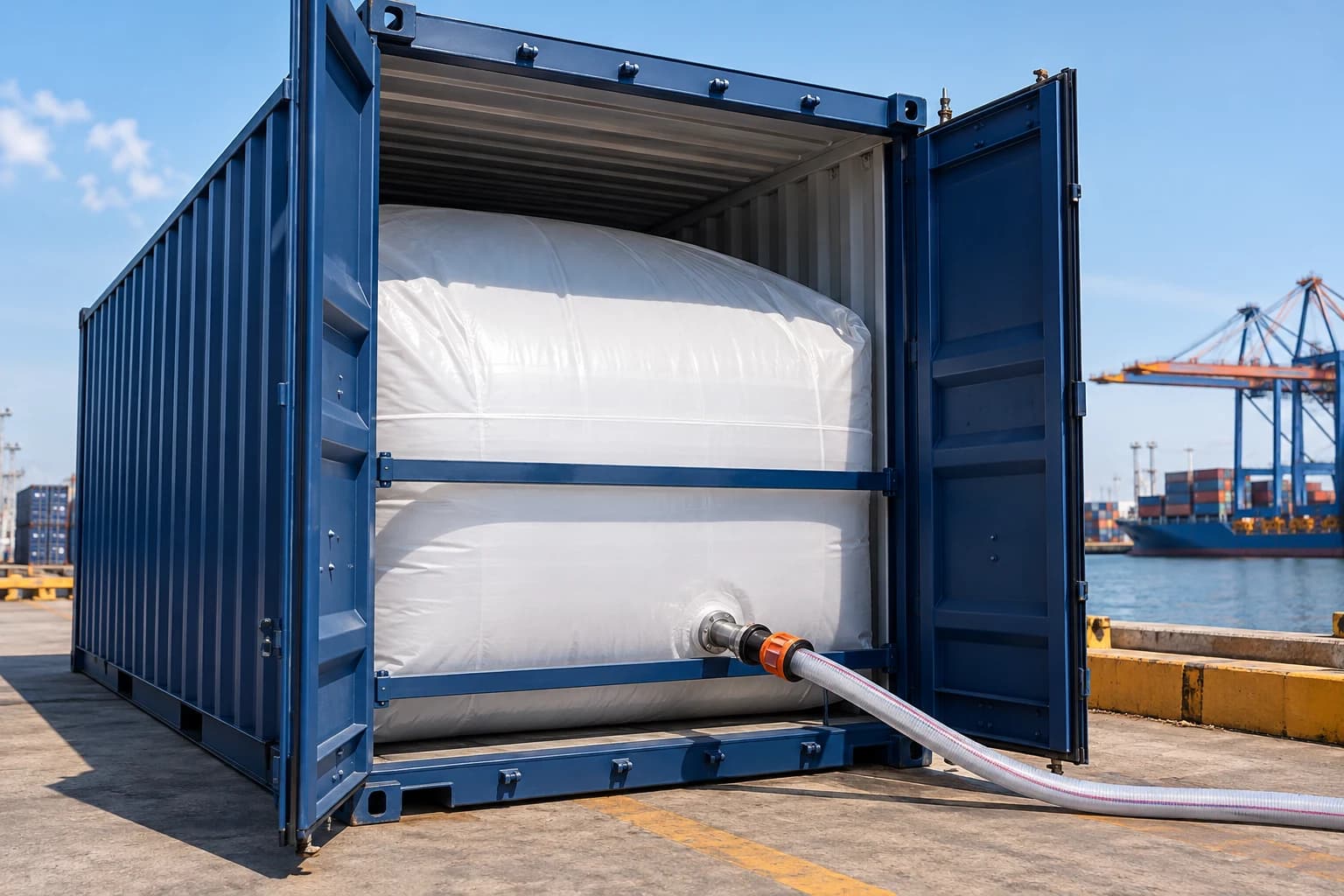
Mombasa is Kenya’s main container gateway, so flexitank shipments inside 20-foot containers are the usual export route for UCO parcels in the trader market. Agree the inspection at loading, the Incoterm, who appoints the surveyor, and who holds the NEMA export permit before you confirm the booking.
Fix whether the exporter, the buyer or a freight forwarder files the permit application and who pays port storage if PIC or insurance documents arrive late. Original waste movement papers should match the bill of lading consignee and notify party the bank sees under a letter of credit.
When you share an offer with Turco & Co for cargo loading at Mombasa, send indicative monthly tonnes, recent laboratory results, storage location and current permit or licence status. That lets us judge feasibility before anyone pays for containers.
Common questions
Do I need a permit to export used cooking oil from Kenya?
Yes, in practice. NEMA regulates UCO as waste and the 2024 waste regulations require a NEMA export permit for hazardous waste exports, together with the supporting contract, movement documents and insurance. Confirm your classification with NEMA.
How much does a NEMA waste export permit cost?
NEMA’s 2025 waste management booklet lists KSh 5,000 for the application and KSh 50,000 per consignment. Verify current fees with NEMA before you quote landed cost to a buyer.
Can I reuse a NEMA export permit for a second shipment?
No. The permit relates to one export transaction, is not transferable and cannot be reused. Each consignment needs its own permit dossier.
Is prior informed consent always required?
The regulations require the prior informed consent document of the receiving country where that regime applies to the waste you are exporting. NEMA and your importer can confirm whether PIC is needed for your destination and waste classification.
What do EU biofuel buyers expect from Kenyan UCO?
Beyond NEMA export consent, they typically require ISCC EU certification at the collecting point, self-declarations from points of origin, lot-specific analysis and inspection, and from 19 November 2027 an approved or registered establishment of origin under Regulation 2025/2181.
Who should hold the NEMA licence in a export chain?
The entity that transports, stores or processes the waste needs the appropriate NEMA licence. The export permit application is usually prepared by the exporter named on the contract with the importer; agree roles in writing before loading.
Sources and evidence
Primary references support the stated technical definitions. Procurement checklists are editorial guidance, not evidence of a specific lot, shipment or certification.
- Kenya — Environmental Management and Co-ordination (Waste Management) Regulations, 2024
- NEMA Kenya — Waste management booklet (2025)
- Commission Regulation (EU) 2025/2181 — Import of used cooking oil
Confirm laboratory methods, commercial terms and applicable requirements with the buyer and qualified advisers before contracting. No guide establishes stock availability or company certification.
Keep reading
How to export used cooking oil: permits, quality, documents and buyers
A practical sequence for exporting UCO: local waste permits, filtration and testing, sustainability evidence, flexitank or bulk logistics, export documents and payment.

Exporting used cooking oil from South Africa: waste export consent and Durban
UCO exports from South Africa need consent under national waste import and export rules updated in 2025. How to build the file, classify the waste, qualify the oil for buyers, and ship from Durban without booking ahead of the regulator.
Shipping used cooking oil in a flexitank
Prepare a UCO flexitank shipment with carrier approval, equipment compatibility, payload checks, sampling and receiving arrangements.
Request a quote
Tell us the volume, origin or destination, end use, quality and the documents you need. We will come back to you.
Request a quote