
Origins and destination markets
Exporting used cooking oil from South Africa: waste export consent and Durban
UCO exports from South Africa need consent under national waste import and export rules updated in 2025. How to build the file, classify the waste, qualify the oil for buyers, and ship from Durban without booking ahead of the regulator.

Direct answer
South Africa’s waste import and export regulations, amended on 6 February 2025, prohibit exporting waste without consent from the competent authority. The application includes a letter of request, the notification form, the receiving facility’s licence or equivalent document, an exporter–importer contract covering environmental clean-up liability and, for hazardous waste, insurance and a safety data sheet. Obtain consent before booking UCO shipments from Durban. Consent is the hinge; collection records and certification are what keep the cargo valuable once it arrives.
Used cooking oil as waste — and why that matters
In South Africa, used cooking oil you export is not treated like a generic edible-oil cargo. It falls under the National Environmental Management: Waste Act and the Regulations for the Control of the Import or Export of Waste, 2017, as amended in 2025. That framing changes the timeline: you build a consent file before you celebrate a freight rate, not after the flexitank is in the yard.
Many traders first encounter the rules when a forwarder asks for “waste export consent” alongside the commercial invoice. The commercial deal still matters — price, payment, specifications — but the regulator’s question is whether the movement is documented, the receiver is licensed, and someone carries liability if something goes wrong in transit.
If you import the same product into Europe or Asia, you may already live with waste-shipment rules there. South Africa’s process is local in form but familiar in spirit: no consent, no export, regardless of what the buyer’s purchase order says.
Consent before export: the February 2025 rules
The 2025 amendments, in force from 6 February 2025, restate a simple prohibition: no person may export waste without the consent required for its transboundary movement. Transit countries may also need to consent, so a route that crosses a neighbour’s port or land border is not only a freight question.
The competent authority issues that consent when the file is complete. Requirements differ between hazardous and non-hazardous waste, which is why the first technical step is classification, not booking a container. Getting the class wrong wastes weeks: you either assemble documents you do not need or discover late that you omitted insurance or a safety data sheet.
Experienced exporters treat consent as a project milestone with its own calendar. Buyers who push for loading dates before consent is granted are asking the South African side to take regulatory risk that the law does not allow. The workable sequence is contract, classification, consent application, consent granted, then inspection and loading.
Building the consent application
Regulations and departmental guidance describe a practical bundle. Exporters typically prepare a letter of request, the notification form, proof that the receiving facility holds a waste management licence or foreign equivalent, and a contract between exporter and importer that includes liability for environmental clean-up if there is an incident during transport or processing.
For non-hazardous waste, Annexure 4 notification forms appear in guidance for categories such as Y48 wastes — the code buyers and consultants often cite for used cooking oil when classification supports a non-hazardous listing. For hazardous waste, expect insurance or a financial guarantee and a safety data sheet as part of the package.
The receiving facility’s licence is not a courtesy copy; it is evidence that the importer’s site may accept the waste stream you describe. Mismatches between the waste description on the notification and the oil actually loaded have caused customs holds elsewhere; South Africa is no place to test sloppy wording.
Keep copies of every submitted form and the consent letter itself with the shipment file. Auditors and buyers may ask for them months later, long after the vessel has sailed.
- Letter of request from the exporter
- Completed notification form (Annexure 4 when Y48 non-hazardous classification applies)
- Waste management licence of the receiving facility, or documented foreign equivalent
- Exporter–importer contract with environmental clean-up liability
- Insurance or financial guarantee and safety data sheet if hazardous classification applies
- Consent letter issued before booking and loading
Preparing South African UCO for international buyers
Consent gets the container onto the vessel; quality and traceability get the oil into the buyer’s refinery or biodiesel plant. South African UCO is collected from restaurants, fast-food chains, hotels and food manufacturers, often through regional collectors who filter and store before larger exporters blend export lots. As in other origins, moisture, free fatty acids and food debris track collection habits more than country labels.
Collection records should tie each tonne to a source or purchase invoice. Filtration and settling are common; document what was done and when, because a buyer’s sustainability auditor will ask. A lot-specific certificate of analysis at loading is baseline; independent inspection at the tank is standard practice for first trades.
For EU biofuel buyers, the collecting point should hold ISCC certification where the buyer’s scheme requires it, with self-declarations from non-certified restaurants feeding into that chain. Check certificates in the ISCC database and request sustainability declarations for dispatched lots. Turco & Co does not hold its own ISCC certificate; we rely on operator certificates and declarations in the chain, the same way a refinery compliance desk would.
From 19 November 2027, EU Regulation 2025/2181 requires cargoes for the EU to come from an approved or registered establishment of origin. South African exporters targeting Europe should plan that registration separately from domestic waste consent — both must be in place, but they answer to different authorities.
Classification: hazardous versus non-hazardous
Classification is not a marketing choice. It follows how the waste is defined under South African rules and how the material behaves in your samples and safety documentation. Used cooking oil is often discussed under non-hazardous waste codes such as Y48 in international listings, but your file must reflect the classification the competent authority accepts for your specific stream and test results.
If hazardous classification applies, the consent package grows: insurance or guarantees and a safety data sheet join the contract and licence copies. Skipping those because “UCO is always non-hazardous” is how shipments stall at the gate.
When in doubt, ask the competent authority or an environmental consultant who works on waste exports regularly, and align the notification form with that advice before you sign a fixed loading date with the buyer. Reclassification mid-process is expensive in demurrage and trust.
Shipping from Durban and managing the handover
Durban is South Africa’s main container port and the natural loading point for flexitank exports of UCO. Containers, flexitanks, heating pads in winter and dunnage are familiar to local packers; the differentiator is whether export consent and inspection are sequenced correctly before the truck enters the terminal.
Agree Incoterms, inspection at loading, and who holds the consent letter before you agree freight. Under FOB Durban, the buyer chooses the vessel, but the seller still must present a file that satisfies South African waste export control. Under CIF or similar terms, clarify who applies for consent and who pays for delays if the authority requests additional information.
Turco & Co reviews UCO offers loading at Durban when sellers share monthly tonnes, laboratory results, storage location and consent status. We are not a substitute for the competent authority; we simply will not treat a cargo as ready until the waste export story and the quality story both check out.
Secondary ports and inland consolidation exist, but Durban’s depth of flexitank service makes it the default in most desk conversations. If your supplier proposes another route, ask how consent and inspection follow the oil — not only how many rand you save on trucking.
Common questions
Can used cooking oil be exported from South Africa?
Yes, provided you obtain consent from the competent authority under the waste import and export regulations, as amended in February 2025. Export without consent is prohibited.
What changed on 6 February 2025?
Amendments to the Regulations for the Control of the Import or Export of Waste, under the National Environmental Management: Waste Act, took effect, reinforcing that waste may not be exported without required transboundary consent.
What documents belong in a consent application?
Typically a letter of request, the notification form, the receiving facility’s waste management licence or equivalent, an exporter–importer contract with environmental clean-up liability, and for hazardous waste, insurance or a financial guarantee plus a safety data sheet.
What is Annexure 4 and code Y48?
Departmental forms and guidance refer to Annexure 4 for notifying certain non-hazardous waste movements. Y48 is commonly cited for used cooking oil when classification supports a non-hazardous listing — confirm classification for your material before filing.
What contract does South Africa require for waste exports?
A contract between exporter and importer that includes liability for environmental clean-up in case of an incident during transport or processing, alongside the other consent documents.
Does Turco & Co hold ISCC certification for South African UCO?
No. Turco & Co does not present its own ISCC certificate. Buyers should rely on the collecting point’s certification and sustainability declarations, verified in the ISCC database when their programme requires it.
Sources and evidence
Primary references support the stated technical definitions. Procurement checklists are editorial guidance, not evidence of a specific lot, shipment or certification.
- South Africa — Regulations for the control of import or export of waste (as amended 6 February 2025)
- ISCC EU 203 — Traceability and chain of custody
- Commission Regulation (EU) 2025/2181 — Import of used cooking oil
Confirm laboratory methods, commercial terms and applicable requirements with the buyer and qualified advisers before contracting. No guide establishes stock availability or company certification.
Keep reading

How to export used cooking oil: permits, quality, documents and buyers
A practical sequence for exporting UCO: local waste permits, filtration and testing, sustainability evidence, flexitank or bulk logistics, export documents and payment.
Exporting used cooking oil from Kenya: NEMA permits and Mombasa logistics
How UCO exports from Kenya work: NEMA licences, the per-consignment export permit, prior informed consent, insurance and shipping from Mombasa.
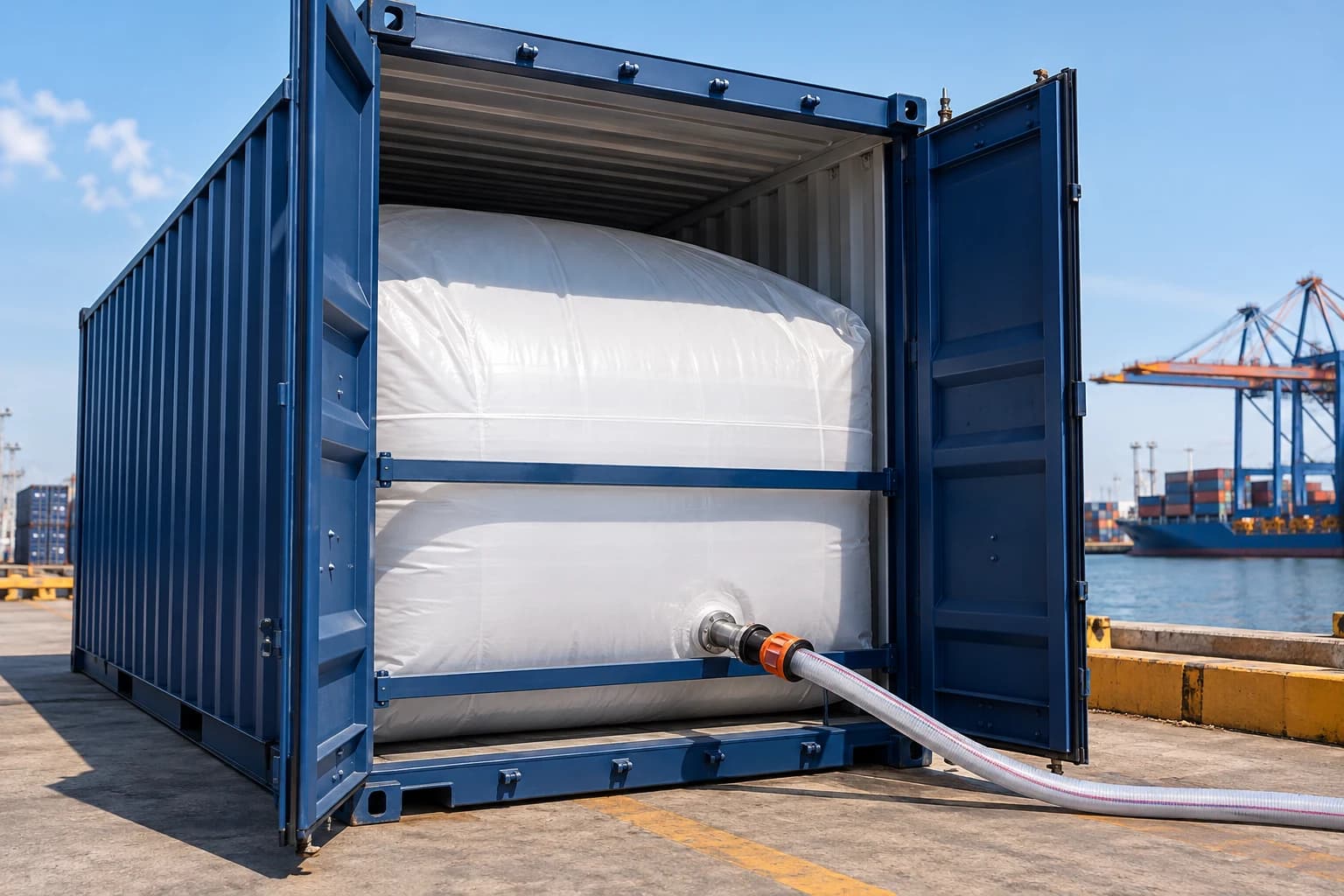
Shipping used cooking oil in a flexitank
Prepare a UCO flexitank shipment with carrier approval, equipment compatibility, payload checks, sampling and receiving arrangements.
Request a quote
Tell us the volume, origin or destination, end use, quality and the documents you need. We will come back to you.
Request a quote