
Origins and destination markets
Used cooking oil from China: export volumes, policy and how to buy
China is the largest UCO exporter. Collection volumes, the end of the export tax rebate, main destinations and the checks a buyer needs before contracting Chinese UCO.
Direct answer
China collects about 5.2 billion litres of used cooking oil a year and exported a record volume in 2024, with the United States its largest market. The 13% export tax rebate for UCO was removed on 1 December 2024, yet exports kept growing in 2026. Buyers should qualify the exporter, the collection chain and the certificates, and check destination rules such as EU Regulation 2025/2181 from November 2027.
Why China sits at the centre of global UCO trade
If you buy or sell used cooking oil internationally, you will touch Chinese supply sooner or later. USDA puts annual collection at roughly 5.2 billion litres — a scale no other origin matches. That volume does not mean every lot is the same: China is a federation of local collection systems, coastal aggregators and export traders, and the name on the bill of lading tells you almost nothing about what is in the tank.
In 2024, about 3.3 billion litres of that collected oil went into domestic biodiesel and renewable diesel production, according to USDA. The rest, plus oil that never entered a formal fuel plant, feeds export parcels. When EU anti-dumping duties of 10% to 35.6% hit Chinese biodiesel in 2025, domestic biomass-based diesel output fell. More UCO stayed in tanks looking for export buyers rather than being absorbed at home. That policy shift in Europe changed arbitrage inside China, not the underlying collection base.
For a trader, the practical lesson is simple: China is deep, but heterogeneous. Your job is to qualify the chain behind each offer — municipality, private collector, aggregator, exporter — not to treat “Chinese UCO” as a single grade.
How oil is collected and aggregated
Collection runs on two rails. Municipal kitchen-waste systems in larger cities divert frying oil and food-service waste into regulated streams. Alongside them, private collectors serve restaurants, canteens, hotels and food processors, often paying cash for drums and IBCs. Both routes converge on aggregators who settle, filter lightly, store in tanks and blend parcels for export.
Coastal provinces in eastern and southern China dominate export logistics: shorter hauls to flexitank stuffing sites, bulk terminals and chemical tanker berths. Inland collection can be excellent oil handled badly — long storage, high moisture — or mediocre oil sold with a glossy certificate. The quality of a lot depends on where the oil was collected and how it was treated, not on the country name printed on the COA header.
Ask exporters how many physical collection points fed the tank you are buying, whether oil was purchased from third parties and how long it sat before loading. Volumes that look too large for the certified collecting point’s geography are a conversation you want before inspection, not after.
Exports, customs data and the rebate removal
China’s UCO exports reached a record in 2024. USDA reports the United States taking about 1.27 million tonnes, roughly 43% of the total — a reminder that North American renewable diesel demand pulled Chinese barrels hard even as Europe debated sustainability evidence.
Beijing removed the 13% export tax rebate on UCO from 1 December 2024, explicitly to keep feedstock for domestic processing. December exports fell sharply, as traders had warned they would when the rebate disappeared. What surprised some market participants was how quickly flows recovered. Chinese customs data reported by trade press put January–May 2026 exports at 1,367,468 tonnes, 36.8% more than a year earlier.
In May 2026, the United States, the Netherlands, Italy, Canada, Singapore and Malaysia ranked among the main destinations. That mix tells you who was bidding: US and European biofuel buyers, Canadian processors, and hub markets such as Singapore and Malaysia where oil can be stored, blended or re-exported. If your contract says “Chinese origin”, make sure your sustainability file matches the actual chain — especially when cargo touches a hub before your plant.
Logistics: flexitanks, bulk and port discipline
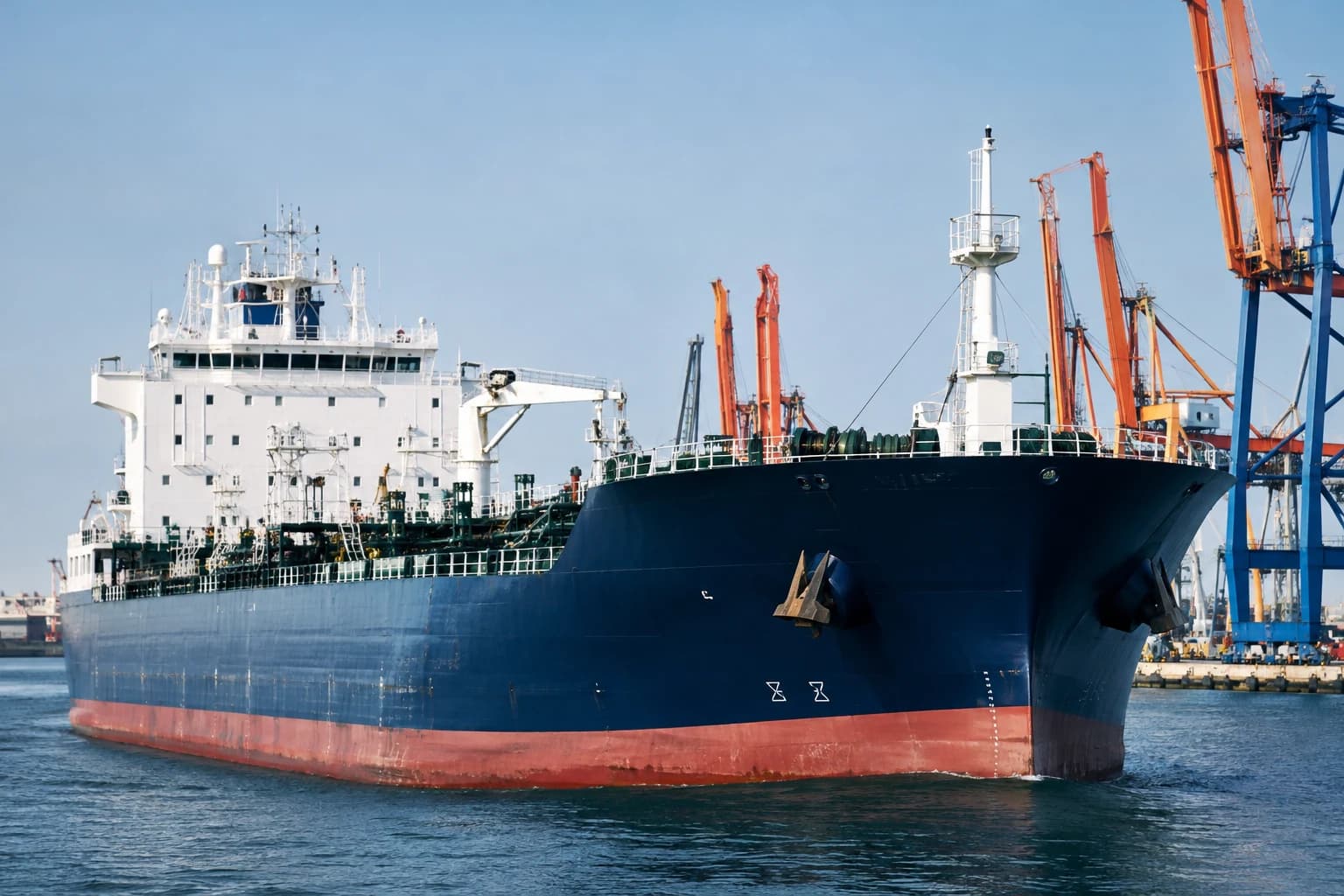
Most Chinese UCO still ships in flexitanks inside 20-foot containers from ports in the east and south. Larger buyers book bulk parcels on chemical tankers when volume and discharge infrastructure justify it. Either way, the Incoterm and who appoints the inspector at loading should be fixed in writing before freight is booked.
Container UCO is sensitive to temperature, residual water and sloppy stuffing. A good loading inspection samples from the tank that will actually drain into the flexitank, checks seals, and records net weight independently of the seller’s spreadsheet. Bulk parcels need the same discipline at the ship’s manifold: line flushing, shore tank identity, and retain samples.
Documentation follows the usual export pattern — commercial invoice, packing list, bill of lading, certificate of analysis tied to the inspected lot, and sustainability declarations where the buyer requires them. Payment against documents or under a documentary letter of credit remains the norm for first-time counterparties. Anyone asking for a “registration fee” before you have verified a real tank should be treated as a red flag, not a cost of doing business.
How to buy Chinese UCO safely
Start with the legal entity. Ask for the exporter’s business licence and export record, then verify the company in the official register using contact details you source yourself. A PDF licence sent from a webmail address is not qualification.
For EU or CORSIA markets, request the ISCC certificate of the collecting point and of the exporter if the chain requires it, then check every certificate in the ISCC database — number, scope, validity and site name must match the operator you are paying. Turco & Co does not hold its own ISCC certificate; we work with the certificates and sustainability declarations of the operators in each chain and verify them the same way a refinery buyer would.
Appoint an independent inspector at loading (or agree jointly on one firm), and tie the certificate of analysis to the inspected lot number. Review free fatty acids, moisture, impurities and volatiles, and any extra parameters your plant adds — phosphorus, metals, sulphur — against the contract spec, not against a generic “export grade” slide deck.
Keep payment security aligned with evidence: release funds when documents check out or when title transfers after inspection, not on the strength of scanned papers alone.
- Exporter licence and export history verified independently
- ISCC certificates of collecting point and exporter checked in the ISCC database
- Lot-specific COA and independent loading inspection
- Destination rules: EU Regulation 2025/2181, US 45Z feedstock eligibility
- Payment against documents or letter of credit — no advance “procedure” fees
Destination rules that catch buyers off guard
From 19 November 2027, used cooking oil imported into the EU under Regulation 2025/2181 must come from an approved or registered establishment in the exporting country, meet filtration limits, travel with the model importer declaration and move under official monitoring to eligible plants. That is separate from ISCC: you need both the establishment reference and the sustainability chain of custody for biofuel use.
If you are buying Chinese UCO for an EU plant, ask now whether your supplier’s collecting and export sites have started the approval or registration process. November 2027 sounds distant until you realise listing timelines are measured in months of authority paperwork, not weeks of trading.
US buyers face a different wall. Fuel produced after 31 December 2025 that claims the 45Z clean fuel production credit must use feedstock from the United States, Canada or Mexico. Chinese UCO can still be imported and processed, but it will not qualify that credit path for post-2025 production. Contract language should say clearly whether the seller warrants eligibility for a specific incentive programme or merely sells conforming waste oil for export.
Canadian and other destinations set their own sustainability and waste rules. Map them before you fix origin, not when the vessel is already sailing.
Common questions
Is China the largest exporter of used cooking oil?
Yes. USDA reports record Chinese UCO exports in 2024, and Chinese customs data reported by trade press show continued growth in 2026, including 1,367,468 tonnes exported in January–May 2026.
Does China still give an export tax rebate on UCO?
No. The 13% export tax rebate for UCO was removed on 1 December 2024. Exports dipped sharply that month, then recovered as buyers adjusted.
Which countries buy the most UCO from China?
In 2024 the United States was the largest market at about 1.27 million tonnes, roughly 43% of exports, according to USDA. Trade press reporting on customs data listed the United States, the Netherlands, Italy, Canada, Singapore and Malaysia among leading destinations in May 2026.
Can Chinese UCO be used for the US 45Z credit?
Not for fuel produced after 31 December 2025, which must use feedstock from the United States, Canada or Mexico. Chinese UCO may still be imported for processing, but it does not meet that feedstock geography for 45Z on post-2025 production.
What changes for EU buyers of Chinese UCO from November 2027?
Regulation 2025/2181 requires each consignment to originate from an approved or registered establishment in China, with filtration, importer declaration and monitored transport conditions. Sustainability certification such as ISCC EU remains required for biofuel use in parallel.
How is Chinese UCO usually shipped?
Mostly in flexitanks in 20-foot containers from eastern and southern ports, or in bulk on chemical tankers for larger parcels. Agree inspection, Incoterm and sample retention before booking freight.
Sources and evidence
Primary references support the stated technical definitions. Procurement checklists are editorial guidance, not evidence of a specific lot, shipment or certification.
- USDA FAS — China Biofuels Annual 2025 (CH2025-0151)
- USDA FAS — China UCO Trade Update (CH2025-0043)
- Fastmarkets — China’s May 2026 UCO exports (GACC customs data) · Secondary source — medium confidence
- Commission Regulation (EU) 2025/2181 — Import of used cooking oil
- IRS Notice 2026-53 — Section 45Z emissions rates
Confirm laboratory methods, commercial terms and applicable requirements with the buyer and qualified advisers before contracting. No guide establishes stock availability or company certification.
Keep reading

US 45Z credit and imported UCO: what changed in 2026
Why fuel made from imported UCO outside Canada and Mexico no longer earns the US 45Z clean fuel production credit from 2026, and what it means for UCO exporters.

Selling UCO into Singapore: Neste’s refinery and the regional hub
Singapore hosts Neste’s 2.6 million-tonne renewable diesel and SAF refinery. Why it draws UCO from Asia and what sellers should prepare.

How to qualify a used cooking oil supplier
A practical UCO supplier due-diligence file: legal identity, origin, availability, quality evidence and logistics readiness.
Request a quote
Tell us the volume, origin or destination, end use, quality and the documents you need. We will come back to you.
Request a quote